
Menu board design
Smartwave designs menu boards for service station cafés and convenience stores across Australia. We lay out your coffee, food and combo offers so customers can choose quickly at the counter, in print or on screen.
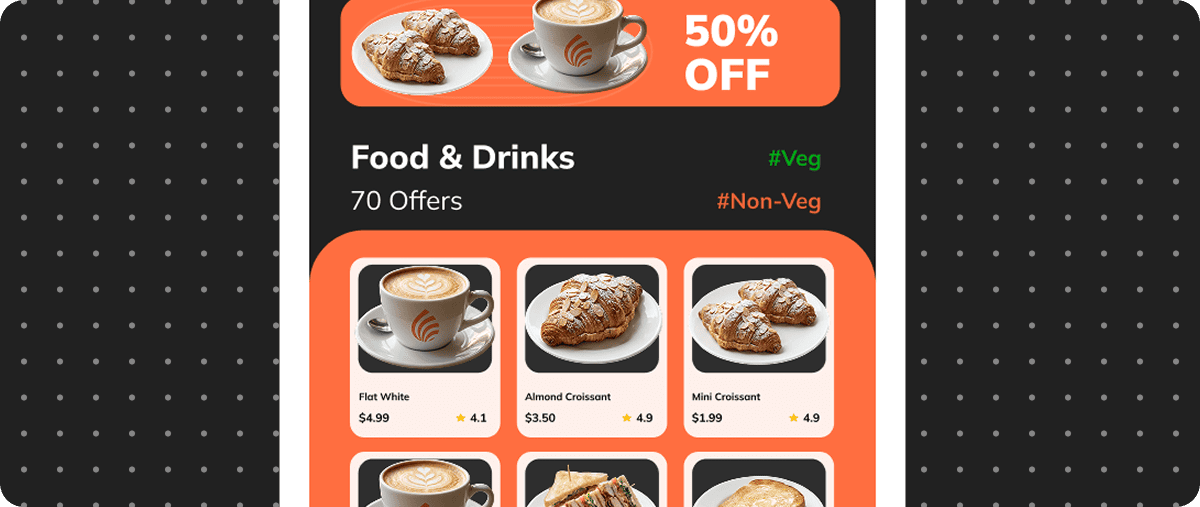
Sample artwork for a fictional fuel brand.
Customers on a fuel stop rarely study a menu. Clear layouts and prices help them choose faster.
Coffee and food pairings can be presented as one simple choice.
Templates keep the look consistent, while prices and ranges can change by site.
What's included
How it works
1
Tell us about your sites, your offers and what you want to improve.
2
We map out the campaigns and assets to focus on first.
3
Our team creates the assets and prepares them for each site.
4
You approve the work, then roll it out across your network.
Why Smartwave
Simple, predictable pricing with no hourly rates or surprise charges.
Most assets are delivered within two business days, so campaigns keep moving.
Work is prepared for your formats and adapted for each site.
Barista boards, counter menus, combo boards, cooler tags, promo cards, shelf talkers and digital menu loops.
Yes. Templates make it quicker to update prices, ranges and offers for each site.
Yes. We create digital menu loops and in-store TV spots as well as printed menus.
Yes. Every asset is made for your brand and formats, and we can also create brand guidelines and templates.
Menu board design is the layout of a food and drink menu for display above or beside a counter. It sets the order of items, the size of names and prices, the photos and the featured offers, so a customer standing a few metres away can read the menu and decide in seconds.
No. For digital menu boards, Smartwave designs what plays on the screen: the menu layout, prices, food photos and short animated loops. The screens and menu board software come from your own supplier, and we deliver the content in the formats that supplier needs.
Clear categories such as coffee, cold drinks and hot food; item names and prices large enough to read from the queue; sizes and options such as milk choices; one or two featured items or combos; and photos of only the items you most want to sell.
Neither is better for every site. Digital boards cost more upfront because they need screens and software, but prices and items can be changed on screen and menus can switch by time of day. Printed boards cost less and are not affected by power or technical faults, but every change needs a reprint.
Update a menu board whenever a price or item changes, so the board never disagrees with the till. Beyond that, most cafés refresh featured items and combos with each seasonal promotion.